Data

Operational knowledge that compounds

Every event creates knowledge, and most of it disappears into spreadsheets, chat histories, inboxes and individual memory. Cothena keeps it connected to the work it came from.

What this unlocks

What connected data is worth

What changes for the team running the next edition when the operation behind the last one is still intact.

Faster onboarding

New team members can start with the context of previous events instead of waiting for one experienced person to explain everything.

Better reuse

Previous events become working playbooks: schedules, tasks, content and operational structures can be cloned and adapted.

Clearer root causes

Dependencies, timestamps and operational history make it easier to understand what happened instead of only seeing the final symptom.

Better comparison over time

When editions share the same underlying structure, patterns become easier to compare across events, seasons and locations.

Portable data

Cothena data can be exported and combined with other datasets when needed instead of being trapped inside the platform.

Captured as a byproduct of doing the work

No extra knowledge-management exercise required.

Cothena structures the information your team creates while using the platform:

  • Schedules, activities and runsheets
  • Venues, spaces and capacities
  • Tasks, dependencies and workflows
  • Conversations, notes and notifications
  • Products, packages, bookings and payments
  • Roles, people and permissions
  • Content and translations
  • Change history and audit trails
  • Planning context such as weather, holidays and external calendars

The important part is that this information stays linked to the event, activity, person or decision it belongs to.

When an event is cloned, Cothena also preserves the lineage between the new edition and the records it came from, so activities can remain traceable across editions.

Because capture happens as a byproduct of doing the work, teams do not need to stop and document the operation again afterwards.

The schedule gives the data its shape

Most software organises information around its own category.

  • Task tools organise around tasks.
  • Ticketing systems organise around tickets.
  • Chat tools organise around conversations.

Cothena organises the operation around the event schedule.

That gives the information natural context: time, place, sequence and relationship.

The same activity can sit inside a guest programme, a staff schedule, a runsheet, a task list, a booking flow and a conversation without becoming six unrelated records.

That shared structure is what makes operational knowledge reusable and comparable over time.

From individual know-how to shared operational memory

When information stays connected, the organisation becomes less dependent on whoever happens to remember how things were done last time.

A new team member can review a previous edition and see the structure that was used.

A returning team can clone what worked instead of rebuilding it.

A manager can trace how a booking, task or decision changed over time.

A future edition can start from a real operational history rather than from memory.

Each person contributes to the system. Each event adds to it. The knowledge compounds.

That is the idea behind Cothena: coordination guided by wisdom and purpose.

Built for what comes next

The data Cothena captures today is already structured, linked, searchable and machine-readable.

That matters because useful automation and AI depend on reliable context.

AI querying across past events is not a live capability today.

The foundation comes first: reliable, connected operational data created while the event is actually being planned and run.

See the structure behind an event

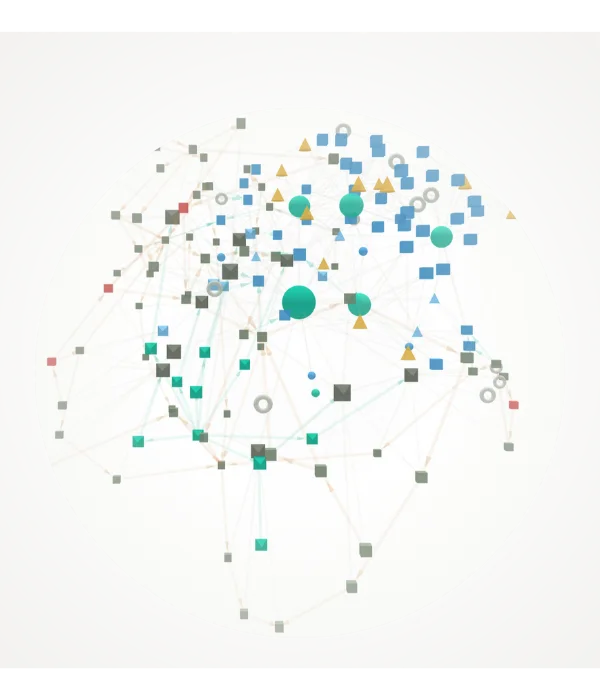
One event can contain hundreds of connected relationships between schedules, activities, tasks, venues, products, conversations, notifications and people.

Explore an example event graph to see how those relationships can form a connected operational knowledge model.

Explore the event graph
One event's data model drawn as a graph: several hundred nodes for schedules, activities, tasks, bookings and people, grouped in colour by type and linked by the dependencies between them.

See it against your own event

Bring a real edition — cities, dates, crews — and we will walk through what Cothena would be holding for you by the end of it.